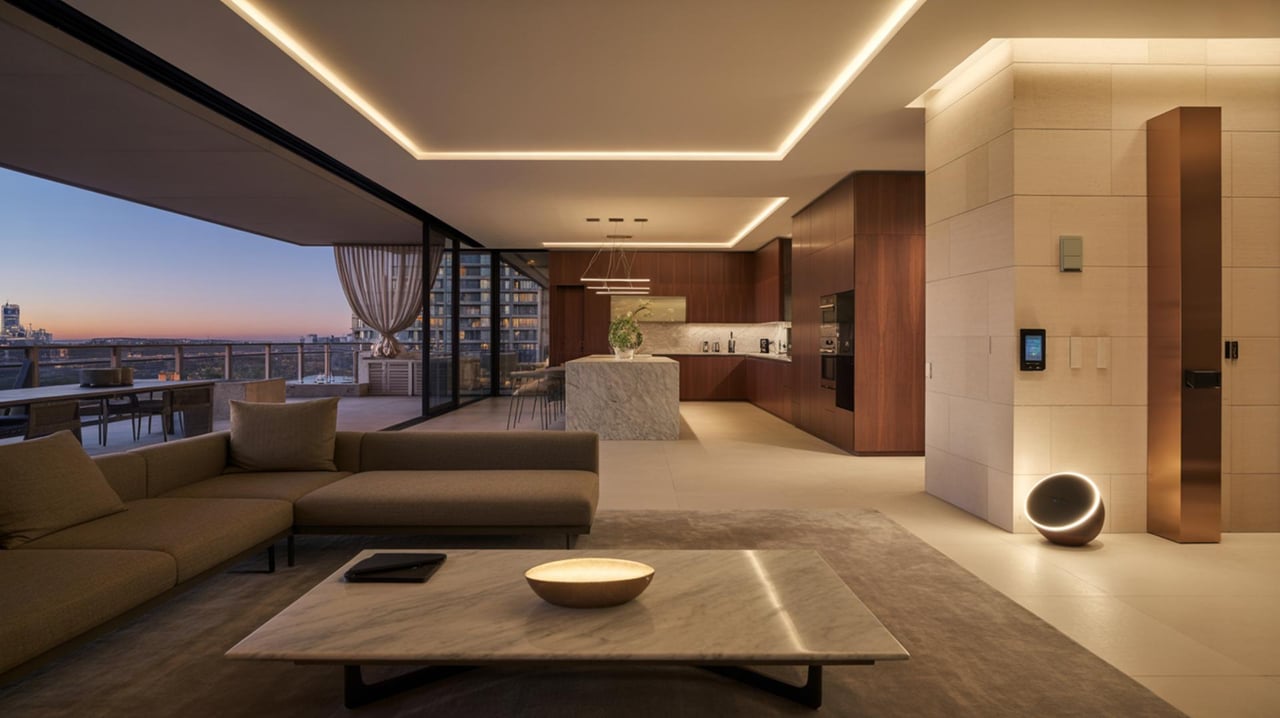
In today's rapidly evolving technological landscape, smart home innovations are transforming the way we live, offering unprecedented convenience, efficiency, and security. These advancements are not just about automating tasks; they are about creating a seamless living experience that integrates with our daily routines. From intelligent lighting systems to voice-activated assistants, smart home technologies are redefining modern living, making our homes more responsive and adaptable to our needs.
Intelligent Lighting Systems
Intelligent lighting systems have become a cornerstone of smart home technology. These systems allow homeowners to control lighting remotely, adjust brightness, and even change colors to suit their mood or activity. With the integration of sensors, lights can automatically adjust based on the time of day or occupancy, enhancing energy efficiency. For instance, smart bulbs can be programmed to gradually brighten in the morning to simulate a natural sunrise, providing a gentle wake-up experience. Additionally, these systems can be controlled via smartphone apps or voice commands, offering unparalleled convenience.
Smart Thermostats
Smart thermostats are revolutionizing home climate control by learning user preferences and adjusting settings automatically to optimize comfort and energy use. These devices can be controlled remotely, allowing homeowners to adjust temperatures from anywhere, ensuring the home is always at the desired temperature upon arrival. Some models even provide energy usage reports and suggest ways to save on heating and cooling costs. By analyzing patterns and adapting to the household's schedule, smart thermostats contribute significantly to reducing energy consumption and lowering utility bills.
Advanced Security Systems
Security is a top priority for homeowners, and smart home innovations have taken security systems to the next level. Modern smart security systems offer features such as real-time video surveillance, motion detection, and remote monitoring through mobile devices. These systems can send instant alerts to homeowners in case of suspicious activity, allowing for quick response. Some advanced systems also include facial recognition technology, which can differentiate between family members, friends, and strangers, providing an additional layer of security.
Voice-Activated Assistants
Voice-activated assistants like Amazon Alexa, Google Assistant, and Apple Siri have become integral to smart homes, offering hands-free control over various devices. These assistants can perform a wide range of tasks, from playing music and setting reminders to controlling smart appliances and providing weather updates. By integrating with other smart home devices, voice assistants create a cohesive ecosystem that enhances the overall user experience. Their ability to understand natural language commands makes them accessible and user-friendly for people of all ages.
Smart Appliances
The kitchen is becoming increasingly intelligent with the introduction of smart appliances. Refrigerators with touchscreens can suggest recipes based on available ingredients, while smart ovens can be preheated remotely. Dishwashers and washing machines can be programmed to run during off-peak energy hours, saving on utility costs. These appliances often come with diagnostic features that alert homeowners to maintenance needs, ensuring optimal performance and longevity.
Home Automation Hubs
Home automation hubs serve as the central command center for smart homes, connecting various devices and systems into a unified network. These hubs enable seamless communication between different smart devices, allowing for coordinated actions and routines. For example, a single command can lock doors, adjust lighting, and set the thermostat to the desired temperature when leaving the house. By simplifying the management of multiple devices, home automation hubs enhance the efficiency and convenience of smart home living.
Energy Management Systems
Energy management systems are designed to optimize energy consumption and reduce costs in smart homes. These systems provide real-time data on energy usage, helping homeowners identify areas where they can improve efficiency. By integrating with smart meters and renewable energy sources like solar panels, energy management systems can automatically adjust power usage based on availability and demand. This not only lowers utility bills but also contributes to a more sustainable lifestyle by reducing the home's carbon footprint.
Smart Entertainment Systems
Entertainment systems have evolved with smart technology, offering immersive experiences that can be tailored to individual preferences. Smart TVs and sound systems can be controlled via voice commands or smartphone apps, allowing users to stream content from various platforms effortlessly. Multi-room audio systems enable synchronized music playback throughout the home, creating a cohesive entertainment experience. Additionally, smart projectors and virtual reality devices are transforming home theaters, providing cinema-quality experiences in the comfort of one's living room.
Health and Wellness Technologies
Smart home innovations are also making strides in promoting health and wellness. Devices such as smart air purifiers and humidifiers monitor air quality and adjust settings to maintain optimal conditions. Smart beds can track sleep patterns and provide insights to improve sleep quality. Additionally, connected fitness equipment allows users to access virtual workouts and track their progress, making it easier to maintain an active lifestyle. These technologies not only enhance comfort but also contribute to overall well-being.
Connectivity and Integration
The backbone of any smart home is its connectivity and integration capabilities. Reliable Wi-Fi networks and advanced protocols like Zigbee and Z-Wave ensure that all devices communicate effectively. This connectivity allows for seamless integration of new devices and systems, making it easy to expand and customize the smart home environment. As technology continues to advance, the integration of artificial intelligence and machine learning will further enhance the capabilities of smart homes, making them even more intuitive and responsive to the needs of their occupants.
Embrace the Future of Smart Living
As technology continues to evolve, smart home innovations are making our lives easier and more efficient. From automated lighting to advanced security systems, these cutting-edge features are transforming modern living. If you're ready to explore how these innovations can enhance your home, reach out to Carrie Paul for expert guidance and personalized solutions. Discover how you can integrate the latest smart technologies into your home today!